
- Why Solar Incentives Matter
- Household Renewable Energy Credit, often known as the American Solar Tax Credit
- State-Level Solar Incentives and Rebates
- Net Metering: Another Way to Save
- Other Local and Utility-Based Incentives
- How to Maximize Your Solar Benefits
- Residential vs Commercial Solar Incentives
- Summing Up
- FAQs
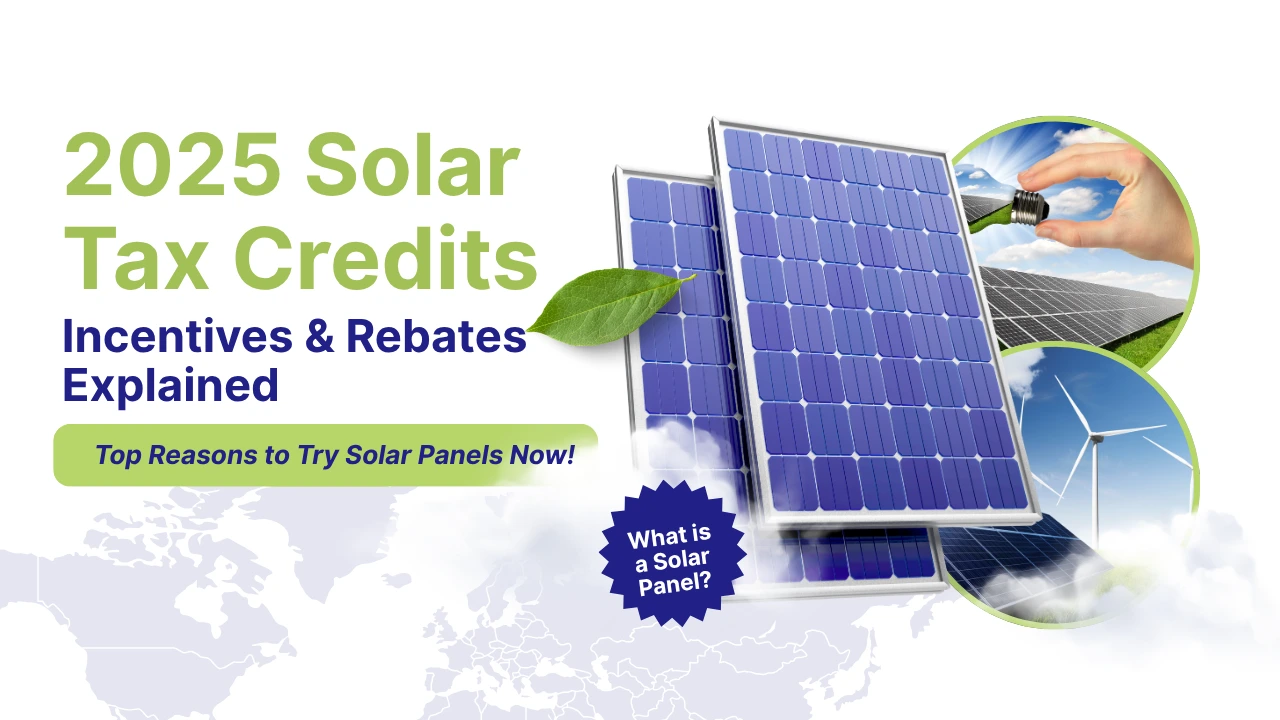
Do you intend to equip your roofing structure with solar panels? Well, in these thoughts, you are not alone. With the increasing cost of electricity and environmental concerns being a top thinkable problem, you have to face it. However, more households are investing in solar panel energy. Thankfully, both state and federal governments are making it easier to make the switch by offering a range of solar incentives that can properly reduce the cost of installation and improve your return on investment.
The information that is given below breaks down the federal solar tax credit, state-specific rebates, clean energy incentives, and other monetary incentives you shouldn’t miss. Along with this, if you are planning to add a solar power panel to your house, being sure about the various programs available to you is essential.
Why Solar Incentives Matter
Installing solar panels is a major home improvement. Although prices have decreased over the years, the upfront cost can still be substantial. Government solar benefits, such as solar panel rebates, tax credits, and net metering programs, are designed to make clean energy more accessible and affordable. These incentives don’t just reduce the initial expense — they help you save more over time by maximizing your energy efficiency and lowering monthly utility bills.
Household Renewable Energy Credit, often known as the American Solar Tax Credit
The federal solar tax credit, often known as the residential clean energy credit, is the largest and most well-known incentive. You can use this method to claim a deduction from your federal taxes for a portion of the cost of installing rooftop solar panels.
How It Works
- 30% Tax Credit: If you install a solar panel system between 2022 and 2032, you can claim 30% of the total cost — including panels, labor, equipment, and permitting- as a federal tax credit.
- No Cap, There’s no dollar limit, meaning whether your system costs $10,000 or $50,000, you can deduct 30% from your tax bill.
- Eligibility: The system must be installed at your primary or secondary residence in the U.S., and you must own the system (not lease it).
State-Level Solar Incentives and Rebates
In addition to the federal credit, many U.S. states offer their own solar energy tax breaks and subsidy programs. These vary widely by location and can include:
1. State Tax Credits
Some states offer additional tax credits that stack with the federal benefit. For example, New York offers a 25% state tax credit for solar energy systems, up to $5,000.
2. Cash Rebates
States like California and Massachusetts provide renewable energy rebates that offer direct payments or discounts on installation costs through programs like
- California Solar Initiative (CSI)
- Massachusetts SMART Program
3. Performance-Based Incentives (PBIs)
Families are paid by PBIs based on the amount of power generated by their system. For instance, some utilities offer payments per kilowatt-hour (kWh) produced.
4. Sales and Property Tax Exemptions
Some states exempt solar panel purchases from sales tax, and others exclude the added value from property tax assessments.
To check what’s available in your area, visit the DSIRE database (Database of State Incentives for Renewables & Efficiency) or contact your local utility provider.
Net Metering: Another Way to Save
Net metering programs are offered in many states and allow you to send excess solar energy back to the grid. In return, you receive credits that reduce your future electricity bills.
Example
Let’s say your panels produce more electricity than you use during the day. That excess energy flows into the grid, and your utility company gives you credit. At night, when your system isn’t producing, you use those credits to offset what you draw from the grid.
Net metering greatly increases your solar payback period by increasing your energy savings and reducing your dependency on the grid.
Other Local and Utility-Based Incentives
Further solar incentives are provided by several utility providers and municipal governments, including:
- Low-interest solar loans through public-private partnerships
- Solar panel installation assistance for low-income households
- Energy-efficient home credits for combining solar with other green upgrades
Utilities may also offer time-of-use billing plans or discounted rates for solar users.
How to Maximize Your Solar Benefits
Selecting the appropriate panels is not enough to maximize your solar expenditure. Here are a few tips:
1. Research All Available Programs
Don’t rely solely on your installer. Use databases like DSIRE and your state’s energy office to find all possible incentives.
2. Work with a Qualified Installer
Certified professionals can help you navigate paperwork, permits, and program applications. They’ll also help with accurate system sizing to ensure maximum efficiency.
3. Consider Financing Options
If upfront costs are a concern, look into the best solar panel financing options, including
- Solar loans
- Solar leases
- Power Purchase Agreements (PPAs)
Each option affects your eligibility for certain tax credits and ownership incentives.
Residential vs Commercial Solar Incentives
If you’re a business owner, you may qualify for even more robust solar benefits, such as:
- The Modified Accelerated Cost Recovery System (MACRS) allows for faster amortization.
- Investment Tax Credit (ITC) for commercial properties
- Local subsidies and utility incentives for commercial solar installations.
Whether you're a homeowner or business owner, reviewing the specific differences between residential vs. industrial solar subsidies might help you select the most affordable option.
Summing Up
Moving on to solar power energy is one of the best decisions you can make, for both environmental and monetary reasons. With a huge range of state and government incentives for solar energy, there has never been a better moment to go green.
From the unthinkable Federal Solar Tax Credit to solar panel rebates, net metering, and local incentives, there are many ways to deduct the costs and speed up your return on investment.
If you want to happily go with this plan, then take the first step towards energy independence and sustainable living today. Discover the profits available in your area on solar power energy, and don’t leave money on the table when you make your solar move.